
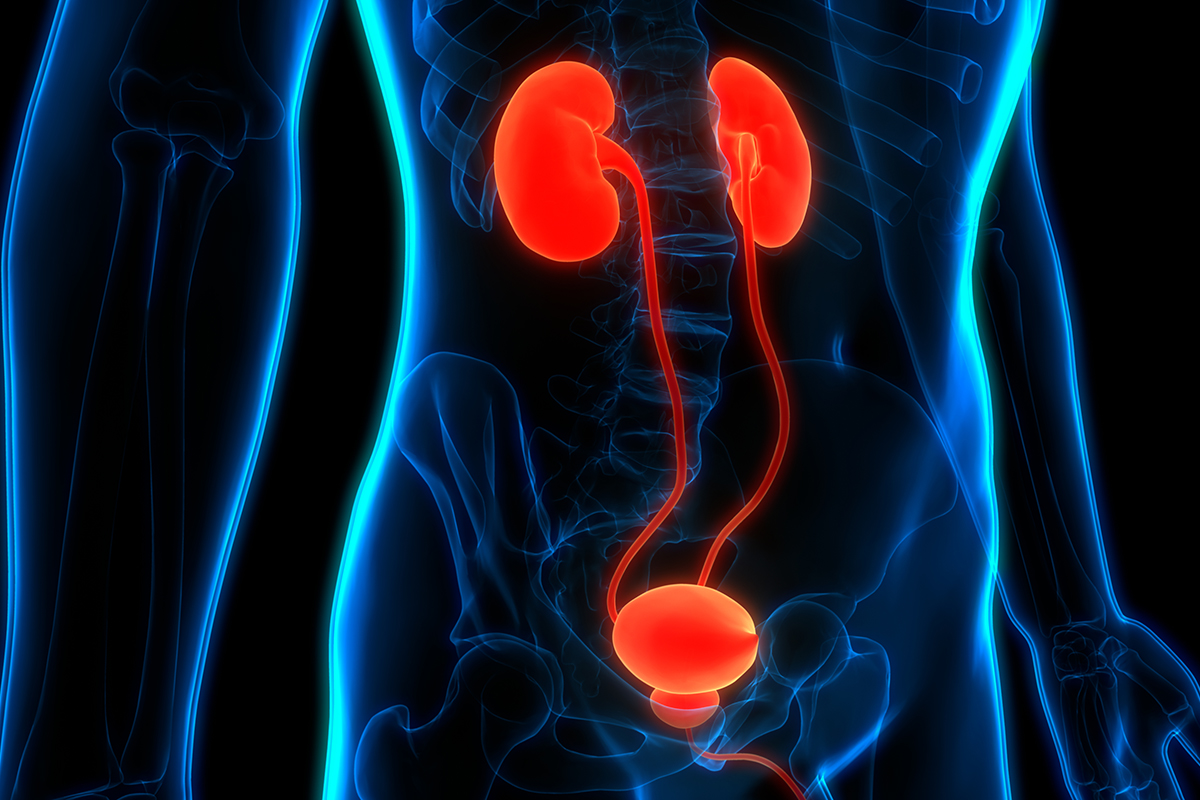
Bladder cancer remains one of the most common malignancies in the United States, with an estimated 82,000 new cases and over 16,000 deaths expected annually.
Urothelial carcinoma, a cancer that begins in the cells that line the urinary tract, accounts for approximately 90% of bladder cancer cases. Most cases are detected early and treated successfully, but prognosis is less favorable for those with more advanced disease.
Over the past decade, however, treatment approaches have evolved considerably and are improving outcomes in more advanced cases. These breakthroughs are driven by routine clinical practice integration of immune checkpoint inhibitors (drugs that helps the immune system fight cancer) and antibody-drug conjugates (a substance that delivers a cancer-killing drug with less side effects)
New options for treating muscle-invasive bladder cancer
For patients with muscle-invasive bladder cancer, meaning the disease has spread beyond the bladder lining and into its muscle wall, it is standard to begin treatment before surgery. This is known as neoadjuvant therapy, or NAC, which shrinks tumors before surgery and improves long-term survival.
The standard approach uses Cisplatin-based chemotherapy drug combinations to shrink tumors before surgery and improve long-term survival. Cisplatin is a drug that contains the metal platinum, which causes cells to die.
However, not all patients can safely receive Cisplatin due to renal insufficiency, overall health or other medical conditions. This has led to increased interest in alternative strategies, including combination approaches that use immune checkpoint inhibitors.
These drugs work by blocking the immune system's "checkpoints," or guardrails, so it can attack cancer cells without restraint.
Recently, the phase 3 NIAGARA trial evaluated this type of combination approach and demonstrated improved event-free survival compared with chemotherapy alone.
Chemotherapy-free strategies are also emerging for Cisplatin-ineligible patients, including drug combinations that include antibody–drug conjugates to deliver cancer-fighting medication directly to tumor cells.
The clinical trial, KEYNOTE-905, examined a chemotherapy-free approach in patients who could not receive Cisplatin and showed high pathologic complete response rates, meaning there was no sign of cancer after treatment.
More recently, another clinical trial — KEYNOTE-B15 — looked at the inverse: using a chemotherapy-free approach in patients who could receive Cisplatin. The same result was noted: a high pathologic complete response rate.
These developments support the gradual shift toward incorporating immunotherapy and antibody-drug conjugates earlier in the disease course.
New standards for advanced disease
For patients with metastatic urothelial carcinoma, or cancer that has spread beyond the bladder, platinum-based chemotherapy has been the cornerstone of treatment. While effective for some, these treatments offered limited long-term survival.
That is beginning to change.
Clinical trials have already shown that immunotherapy, particularly as a maintenance treatment, improves overall survival for some patients.
More recently, a combination of an antibody–drug conjugate and an immunotherapy drug has emerged as a new first-line treatment option for many patients with metastatic disease. Clinical trials have shown this approach can significantly extend both overall survival and the time patients live without their cancer worsening (31.5 months versus 16.1 months).
Additional targeted therapies are also available for patients whose tumors have specific genetic changes and show progression even after platinum-containing chemotherapy and immunotherapy.
Looking ahead
The treatment landscape for urothelial carcinoma is evolving quickly. While chemotherapy played an important part of care — especially before surgery — newer therapies are expanding options at every stage of the disease. They are becoming standard of care and preferred in clinical practice because of its high efficacy and less side effects.
Ongoing research is focused on identifying which treatments work best for which patients, often based on the unique biology of their cancer. This shift toward more personalized, targeted care is expected to continue improving outcomes in the years ahead.
For patients, these advances mean more choices — and more reason for hope — than ever before.
LEARN MORE ABOUT BLADDER CANCER TREATMENT AT NORTHSIDE.