The Northside Hospital Cancer Institute announced its Blood & Marrow Transplant (BMT), Leukemia and Immunotherapy Clinical Research Program has enrolled the first mantle cell lymphoma (MCL) patient nationwide in an early-phase clinical trial evaluating novel dual-target CAR T-cell therapies for patients with relapsed or refractory B-cell lymphoma.
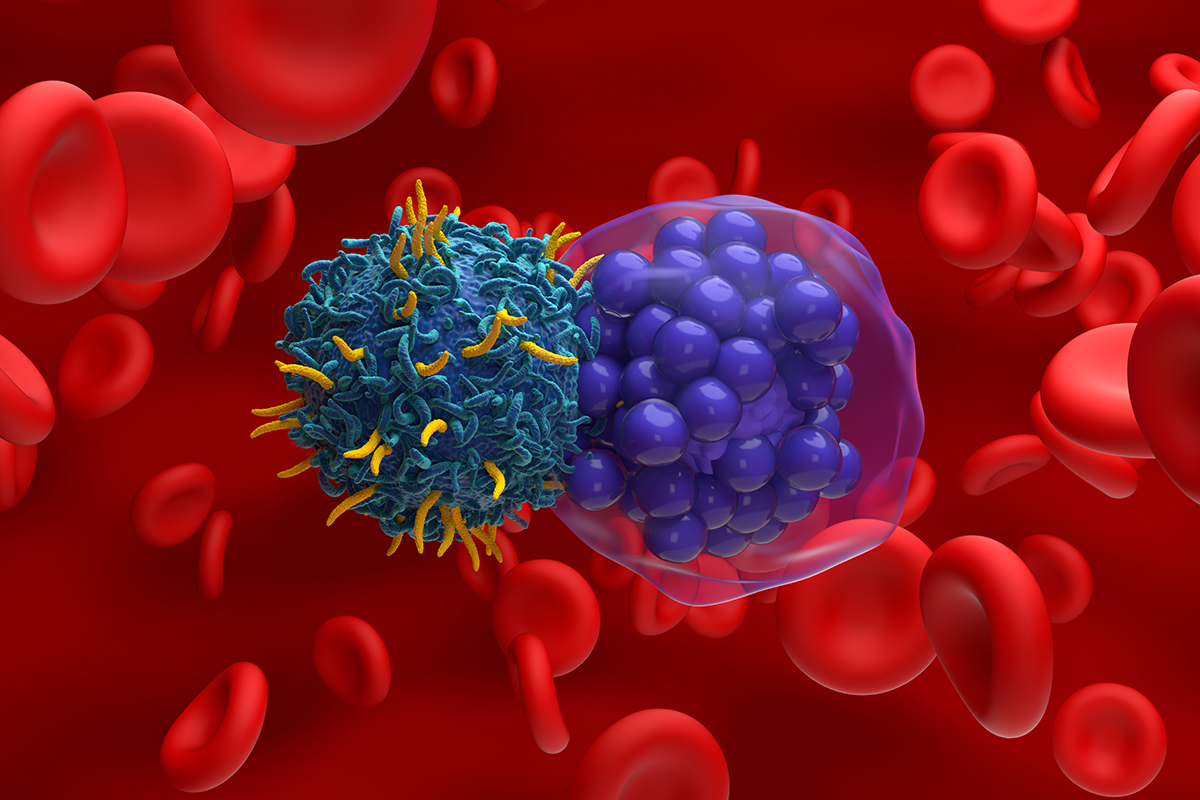
The study, titled "A Phase 1/2 Open-Label, Multicenter Study Evaluating the Safety and Efficacy of KITE-363 or KITE-753, utilizing Kite’s DuoCore™ construct, two independent CARs working synergistically, in Subjects with Relapsed and/or Refractory B-cell Lymphoma (NCT04989803)," is sponsored by Kite, A Gilead Company. The trial is designed to evaluate the safety and efficacy of investigational autologous CAR T-cell therapies KITE-363 and KITE-753, which target both CD19 and CD20 antigens.
Northside Hospital is the first site in the nation to enroll a patient in the mantle cell lymphoma cohort of this study, underscoring its leadership in advancing access to early-phase, cutting-edge immunotherapy trials outside of a traditional academic medical center setting.
MCL is an aggressive, difficult-to-treat lymphoma, and many patients relapse after existing treatments, including CAR T-cell therapy. This new generation cell therapy is designed to reduce tumor resistance by targeting two antigens instead of just one.
“While CD19-directed CAR T-cell therapy is the standard of care, disease relapse following treatment continues to be a major cause of treatment failure,” said Dr. Asad Bashey, medical director for Northside’s Blood & Marrow Transplant, Leukemia and Immunotherapy Clinical Research Program.
“Dual targeting of both CD19 and CD20 antigens may help overcome tumor resistance and improve long-term outcomes,” Bashey added. “Our participation in this trial — and enrolling the first MCL patient nationwide — is an important step forward in expanding access to next-generation therapies and demonstrates the availability of pioneering novel therapy clinical trials at Northside.”
The initial investigational therapy explored in Phase 1, KITE-363, is a bicistronic autologous CAR T-cell product engineered to express two independent chimeric antigen receptors:
- One targeting CD19 with a CD28 costimulatory domain
- One targeting CD20 with a 4-1BB costimulatory domain
This dual-targeting approach is designed to enhance both efficacy and safety by combining complementary signaling pathways.
A next-generation version of the therapy, KITE-753, is also being studied in Phase 1 and Phase 2, with faster manufacturing and a significantly lower cell dose.
KITE-753's rapid manufacturing process produces a less differentiated, more “juvenile” CAR T-cell population, enabling treatment at a dose of approximately 200,000 CAR T-cells versus 2 million cells used in earlier CAR T-cell therapies.
This approach may translate into improved efficacy and safety outcomes, as well as faster time from cell collection to infusion, which may facilitate CAR T use in broader community and outpatient settings.
Northside’s BMT, Leukemia, and Immunotherapy Clinical Research Program has the ability to conduct complex clinical trials and bring innovative therapies to patients in a community-based setting. The program has opened 315 clinical trials, 40 of which have been Phase 1 trials, meaning those treatments were used for the very first time to benefit patients. Overall, Northside has enrolled 1,665 patients in clinical trials since the program’s inception in 1998.
For more information about this study, including patient eligibility, contact Caitlin Guzowski, clinical research manager for Northside’s BMT/Leukemia, at 404-851-8523 or [email protected].
FIND MORE CANCER RESEARCH AND CLINICAL TRIALS AT NORTHSIDE.