
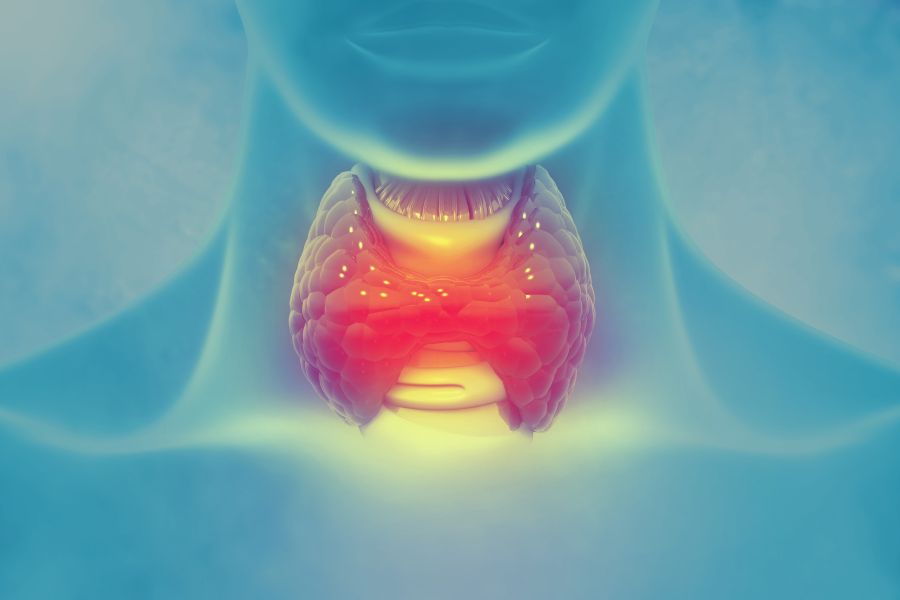
January is Thyroid Awareness Month, a time to spotlight a small but powerful gland that plays a major role in nearly every system in the body. The thyroid, located at the base of the neck, helps regulate metabolism, energy, temperature, heart rate and even mood.
Dr. Michael Marino, an endocrinologist with Northside Hospital Diagnostic Clinic, says the thyroid’s impact on overall health is far-reaching.
“In short, the thyroid helps to control the body’s metabolism,” Dr. Marino said.
How the thyroid works
The thyroid produces two key hormones — thyroxine (T4) and triiodothyronine (T3). Although the gland produces more T4, T3 is the more active form in the body.
Dr. Marino explained that after entering the bloodstream, much of the T4 is converted into T3. These hormones enter cells and bind to thyroid hormone receptors, influencing how DNA directs protein production.
The pituitary gland regulates the thyroid’s hormone production through thyroid-stimulating hormone, or TSH.
“Overall, the thyroid hormones are produced when the thyroid is stimulated by TSH, which is secreted by the pituitary gland when there is not enough thyroid hormone available in the bloodstream,” Dr. Marino said. “If there is a surplus of thyroid hormone in the bloodstream, TSH levels will usually fall.”
Together, these hormones affect our energy levels, metabolism, weight, heart rate, body temperature and even menstrual cycles.
Hypothyroidism vs. hyperthyroidism
Thyroid disease generally falls into two categories: hypothyroidism and hyperthyroidism.
“Hypothyroidism means that your thyroid is not producing enough thyroid hormone,” Dr. Marino said. “The T4 and T3 levels will be low with high levels of TSH.”
Hyperthyroidism is the opposite.
“Hyperthyroidism means that your thyroid is producing too much thyroid hormone and the T4 and T3 are usually elevated with a low level of TSH,” he added.
Symptoms to watch for
Because thyroid hormones affect so many systems, symptoms can be wide-ranging.
In hypothyroidism, Dr. Marino said you should watch out for:
- Feeling cold all the time
- Unexplained weight gain despite no dietary changes
- Fatigue
- Depression
- Constipation
- Swelling or puffiness
- Slowed heart rate
In hyperthyroidism, common symptoms include:
- Insomnia
- Tremors
- Palpitations
- Unexplained weight loss
- Anxiety
- Increased frequency of bowel movements
- Feeling hot/sweaty all the time
“If you are having any of these symptoms, have your primary care doctor check your TSH and Free T4 hormone levels and refer you to an endocrinologist if abnormalities are present on the tests,” Dr. Marino said.
What causes thyroid disease
“Most commonly, they are due to autoimmune conditions in which your body produces antibodies that affect the thyroid,” Dr. Marino said.
Grave’s disease causes the thyroid to make too much thyroid hormone, while Hashimoto’s thyroiditis can initially cause overproduction and later lead to destruction of thyroid tissue and reduced thyroid levels.
Other causes of thyroid disease include overactive thyroid nodules, certain medications such as amiodarone (used to treat arrhythmia), and viral illnesses that temporarily affect thyroid function. Iodine deficiency can also affect health, though this is uncommon in the United States.
“Thyroid disease is more common in women, patients with other autoimmune disorders and people with a family history of thyroid dysfunction,” Dr. Marino said.
How is thyroid disease diagnosed
Blood tests are the first step in diagnosing thyroid disease.
“Endocrinologists usually check TSH and Free T4,” Dr. Marino said. “These initial labs can tell us if the thyroid is overactive or underactive.”
Doctors may also test for thyroid antibodies or order imaging studies to assess thyroid function and determine whether treatment is needed.
Treatment options
Treatment depends on whether the thyroid is underactive or overactive.
“If the thyroid is underactive, this can be treated by giving the patient synthetic thyroid hormone pills,” Dr. Marino said. “If the thyroid is overactive, doctors can prescribe medication to slow down the production of excess thyroid hormone.”
While the patient is on medication, doctors may periodically check thyroid levels with blood tests to ensure they return to — and stay within — the normal range. In some cases, surgery or radioactive iodine ablation may also be used to treat overactive thyroid disease.
Why symptoms don’t always tell the whole story
Many symptoms of thyroid disease are common and can overlap with other conditions.
“The symptoms that accompany hyperthyroidism and hypothyroidism are somewhat nonspecific and can be related to many different problems,” Dr. Marino said. “It is very possible that a patient could have some of the symptoms with a normally functioning thyroid. If the thyroid labs come back looking normal, other reasons for the symptoms need to be considered and investigated.”
During Thyroid Awareness Month, Dr. Marino encourages you to pay attention to persistent symptoms and talk with your health care provider. Early testing and treatment can make a meaningful difference in long-term health and quality of life.
LEARN MORE ABOUT ENDOCRINOLOGY AT NORTHSIDE.